Getting there
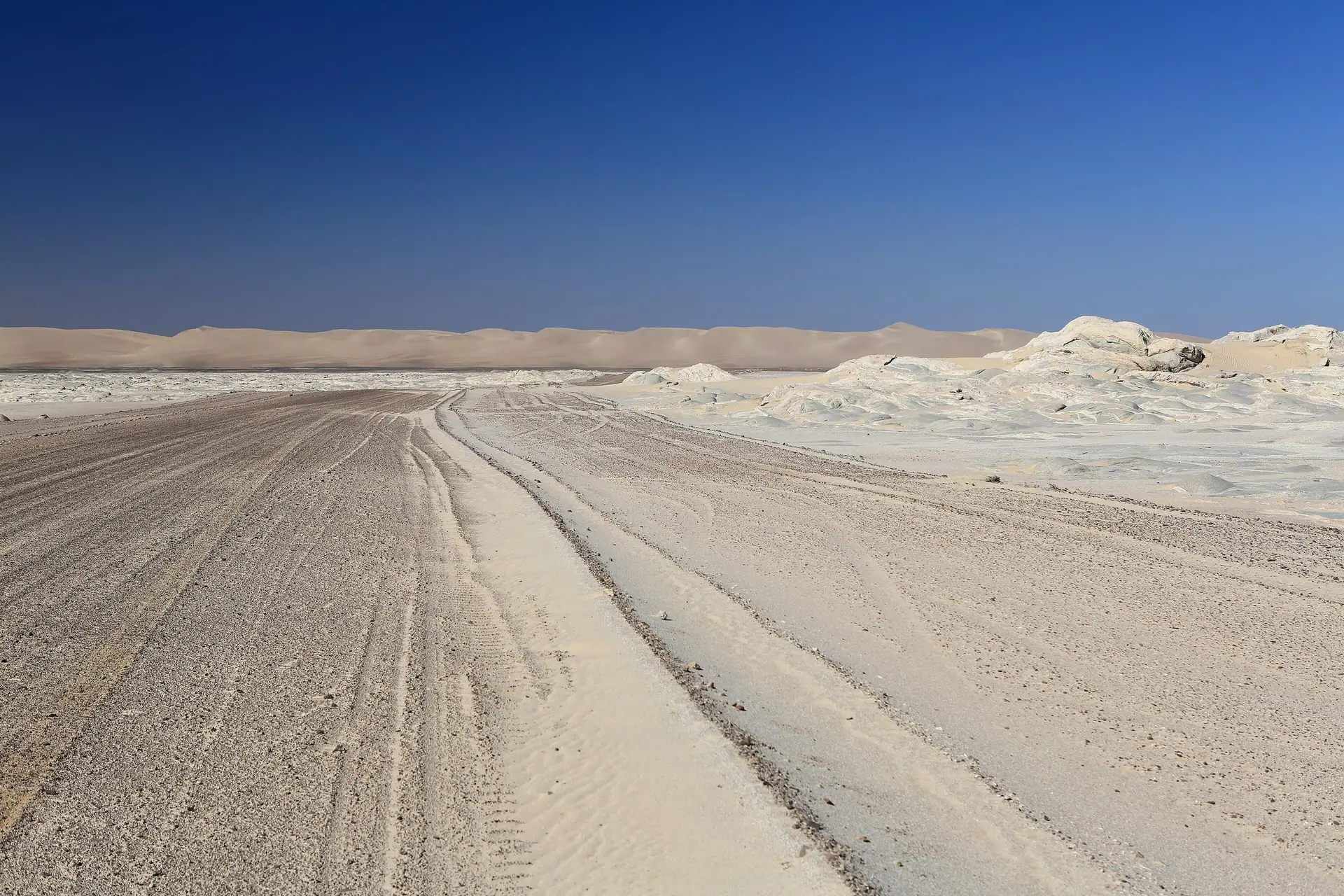
From Swakopmund, the C34 follows the coast north via Henties Bay, about 75 km away, and past Cape Cross. Inside the Skeleton Coast Park, the C34 and the D2302 are the roads vehicles keep to; the D2302 runs near Torra Bay and Terrace Bay. From the interior, the C39 comes from Khorixas to the park station at Springbokwasser and on to the coast road. Namibia Wildlife Resorts gives Terrace Bay as 648 km from Windhoek and Torra Bay as 595 km.
The park's management plan says self-drive groups enter at Springbokwasser or Ugabmund, and the ministry lets visitors in only with a booking. You may not enter through the dry riverbeds that cross the park. There are airfields at Terrace Bay and Möwe Bay.
What to see
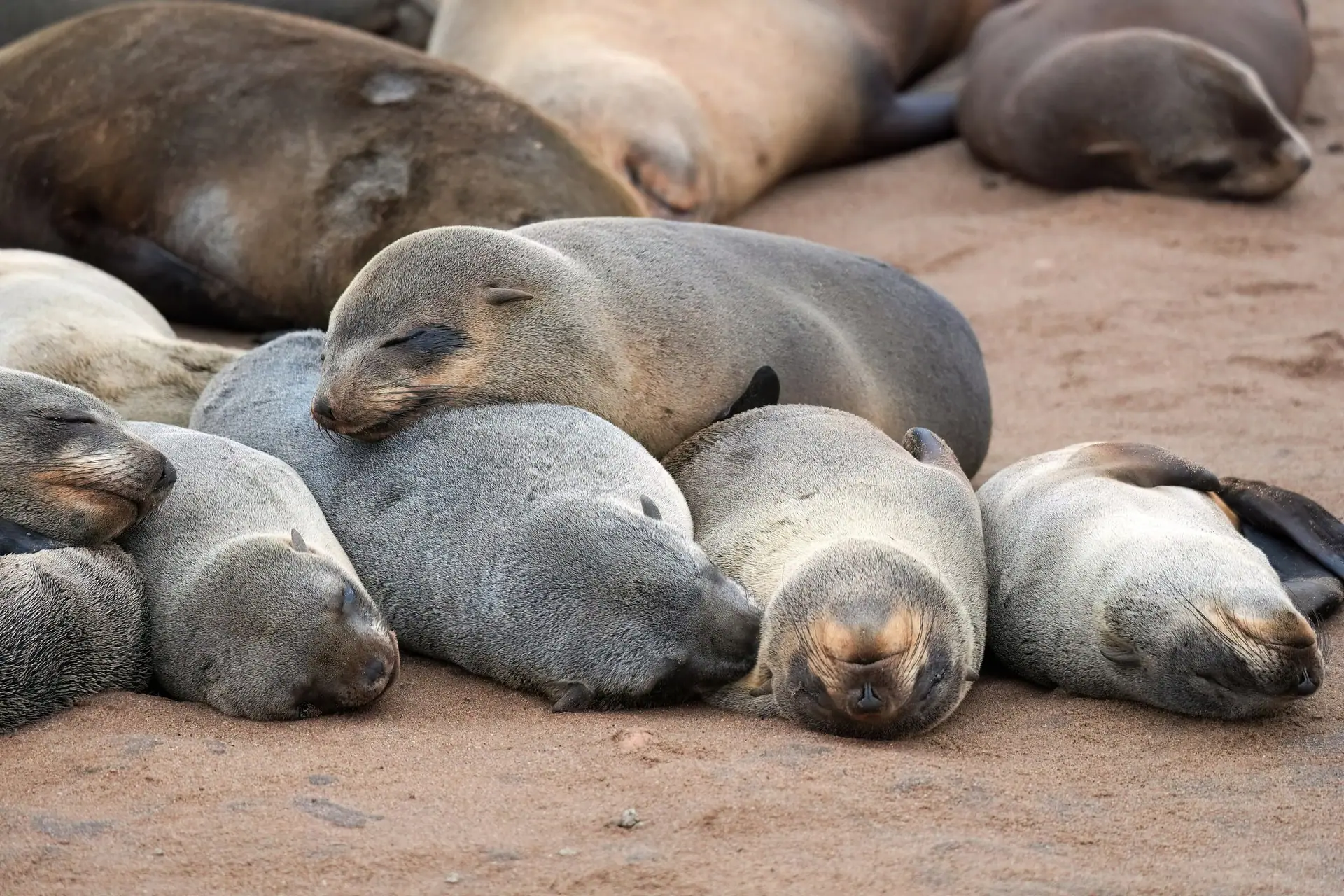
Cape Cross, a separate reserve in the northern part of the Dorob National Park, has the world's largest breeding colony of Cape fur seals, with up to 210,000 animals in November and December; a boardwalk runs along it. A replica of the stone cross (padrão) raised by the Portuguese navigator Diogo Cão stands there and has been a historical monument since 1968.
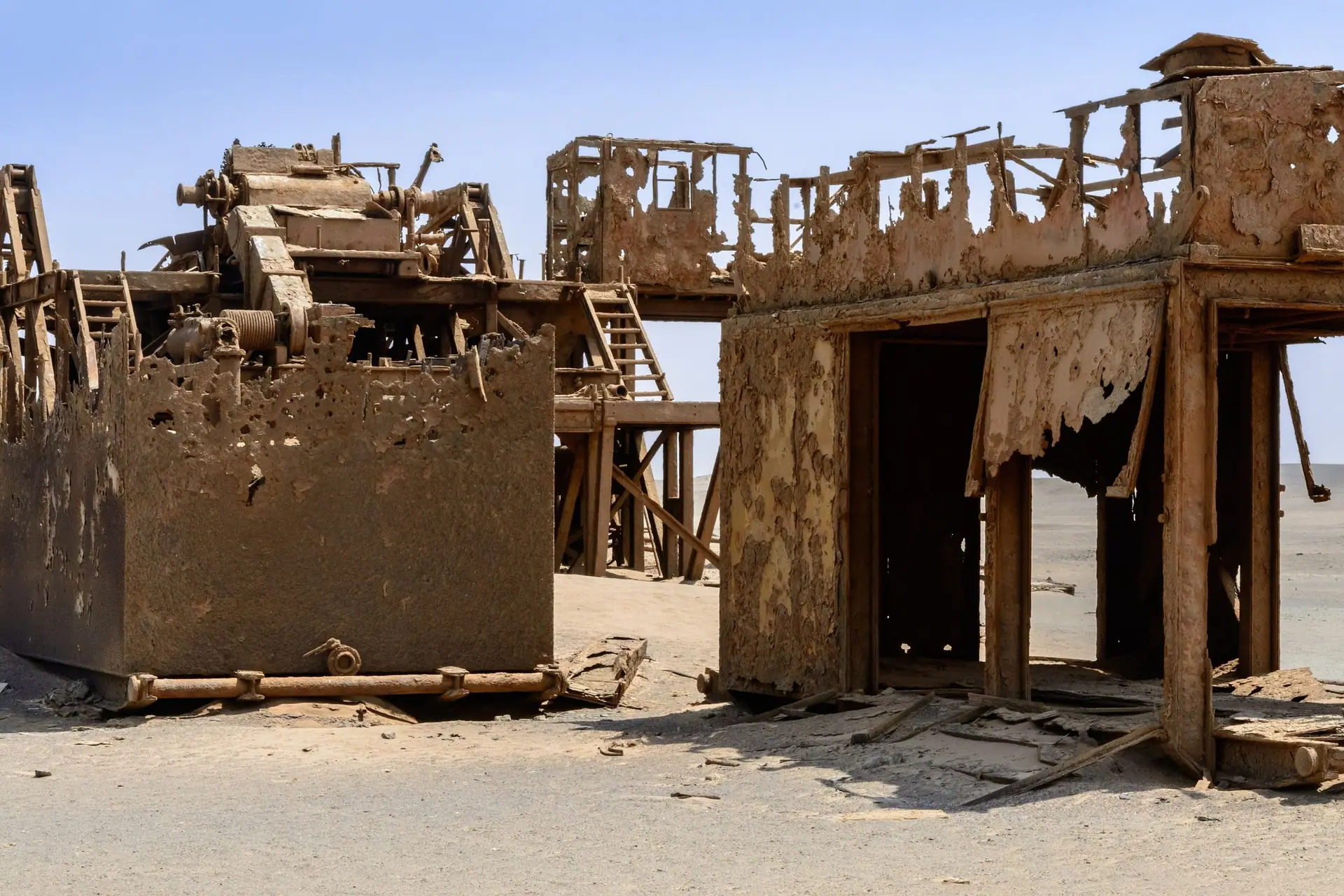
Inside the park, Torra Bay and Terrace Bay are known among anglers, and the delta of the Uniab River is near Terrace Bay. The ministry's management plan lists the known shipwrecks, among them the trawlers Girdleness and South West Seal at the mouth of the Ugab River and the Atlantic at Torra Bay. All wrecks are protected by law, and taking any part of them is an offence. Parts of 17th-century wrecks from Cape Fria are kept in the museum at Möwe Bay.
Parks and wildlife
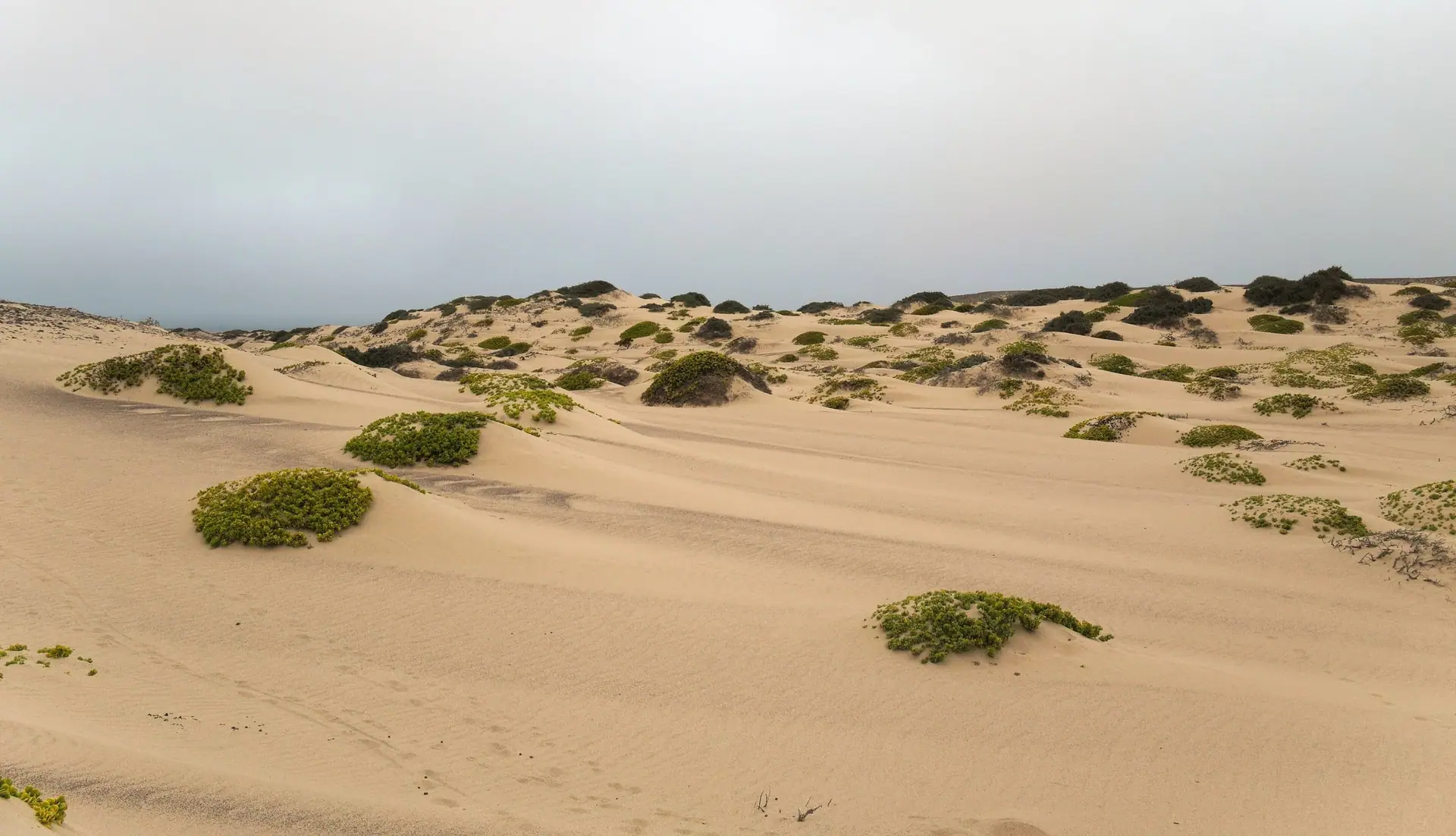
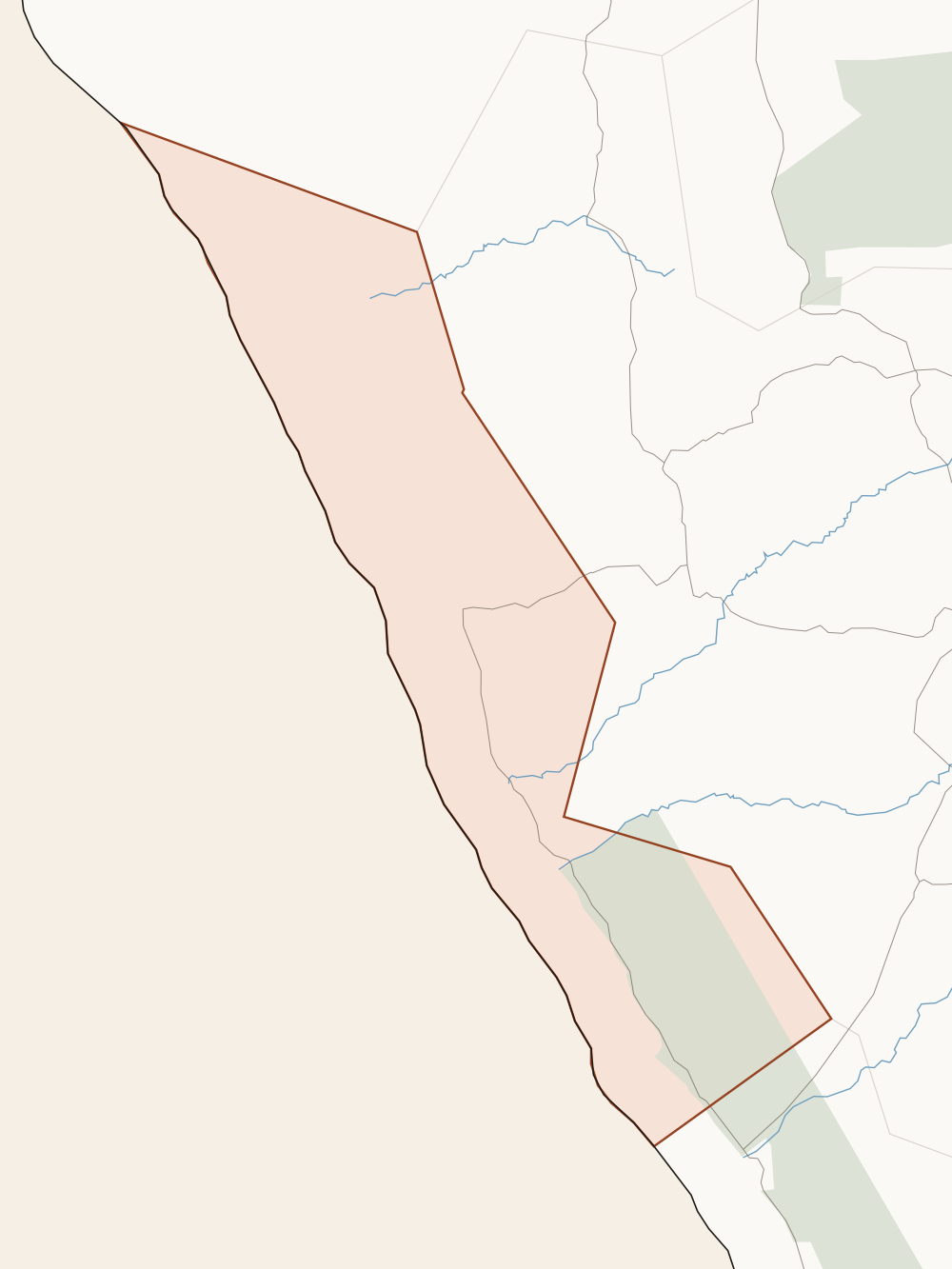
The Skeleton Coast Park covers 16,390 km² and runs about 500 km from the Ugab River north to the Kunene River, and about 40 km inland. It was first proclaimed in 1971 and took its present form in 1973. The landscape is dunes, canyons of coloured volcanic rock and mountain ranges, and more than 100 species of lichen grow on the plains and west-facing slopes. The elephant's foot, Adenia pechuelii, anchors itself in rock crevices.
The ministry calls the park a sanctuary for desert-dwelling elephant, rhino and lion, and the Kunene River mouth a vital wetland. It also lists cheetah, crocodile, springbok, Hartmann's zebra, oryx, Heaviside's dolphin and the green turtle, and 306 bird species. Along its whole eastern border the park meets communal conservancies, among them Puros, Sesfontein, Torra and Doro !nawas, and the Palmwag tourism concession area.
Where to stay
Inside the park, Namibia Wildlife Resorts runs two places. Terrace Bay is open all year and has 20 double rooms, three beach chalets, a restaurant and a kiosk. Torra Bay is a campsite with 60 sites that opens only in December and January, with a shop and a filling station.
South of the park, in the Dorob National Park, Namibia Wildlife Resorts runs Mile 72 and Mile 108, each with five fishermen's chalets and campsites; Mile 72 also opens only in December and January. A privately run lodge borders the Cape Cross reserve.
Good to know
You need a fishing licence before entering the Skeleton Coast Park. The park regulations forbid driving between 22h00 and 06h00 off the proclaimed through roads, staying overnight anywhere but on official campsites, and motorcycles; angling is allowed only with rod and reel in the angling area. Nobody may leave Terrace Bay or Torra Bay for Swakopmund after 15h00, or pass the Ugab control point towards them after that hour.
Park fees follow Government Notice 115 of 2026, in the same group as Cape Cross: adults from abroad pay N$280, SADC nationals N$180 and Namibian citizens N$60, and a vehicle with up to 10 seats costs N$60. Angling is not allowed at Cape Cross, and the CDC advises keeping away from seals because of rabies. Inside the park, fuel is listed only at Torra Bay, which is open in December and January.
Climate
The cold Benguela current shapes this coast. It brings dense coastal fog and cold sea breezes, and the Namibia Tourism Board describes the coastal region as cool and free from rain for most of the year, with fog that usually lifts by mid-morning. When the fog pushes inland, the lichens on the plains soften.
The nearest figures in the Meteorological Service's long-term table come from Walvis Bay, further south: an average January maximum of 20.4 °C and 4.4 mm of rain in the wettest month, March.
Sources: Ministry of Environment, Forestry and Tourism, Skeleton Coast Park · Ministry of Environment, Forestry and Tourism, Cape Cross Seal Reserve · Namibia Wildlife Resorts, Terrace Bay Resort · Namibia Wildlife Resorts, Skeleton Coast National Park · OpenStreetMap contributors (ODbL), route relation C34 · OpenStreetMap contributors (ODbL), road distances computed with the OSRM router · Ministry of Environment, Forestry and Tourism, Skeleton Coast National Park Management Plan 2021/2022–2030/2031 · Ministry of Environment, Forestry and Tourism, Dorob National Park · National Heritage Council of Namibia, Heritage Places · Namibia Wildlife Resorts, Torra Bay Campsite · Namibia Wildlife Resorts, Mile 72 · Namibia Wildlife Resorts, Mile 108 · Regulations Relating to Nature Conservation, GN 240 of 1976, consolidated text (MEFT) · Government Gazette 8877, Government Notice 115 of 2026 (park entry fees) · CDC, Travelers' Health: Namibia · Namibia Tourism Board, Climate · Namibia Meteorological Service, long-term climate statistics for selected stations · OpenStreetMap contributors (ODbL), route relation C39 · OpenStreetMap contributors (ODbL), road number D2302 read from map data · checked 24 October 2026