Getting there
The B4 is tarred all the way from Keetmanshoop via Goageb and Aus to Lüderitz, and it passes Kolmanskop just before the town. Lüderitz is about 690 km by road from Windhoek, about 335 km from Keetmanshoop and about 125 km from Aus. At Aus the C13 branches south towards Rosh Pinah, and from Goageb the C14 heads north via Bethanie and Maltahöhe; Sesriem is about 465 km away.
Lüderitz Airport, run by the Namibia Airports Company, lies among the dunes close to Kolmanskop. FlyNamibia flies between Eros Airport in Windhoek and Lüderitz from Monday to Friday, on a schedule valid from 26 October 2026. The Namibia Tourism Board describes 4x4 driving on this coast only as guided trips and advises against leaving the roads on your own.
What to see
Lüderitz is where the rocky Atlantic coast meets the Namib Desert. The Felsenkirche, an Evangelical Lutheran church, stands high on Diamond Hill, and Goerke Haus of 1910 is a national monument and a museum. Other buildings from the early 1900s are national monuments too, among them the Deutsche Bank Afrika building of 1907, the town's first bank, and Kreplin House of 1909, built for the first mayor.
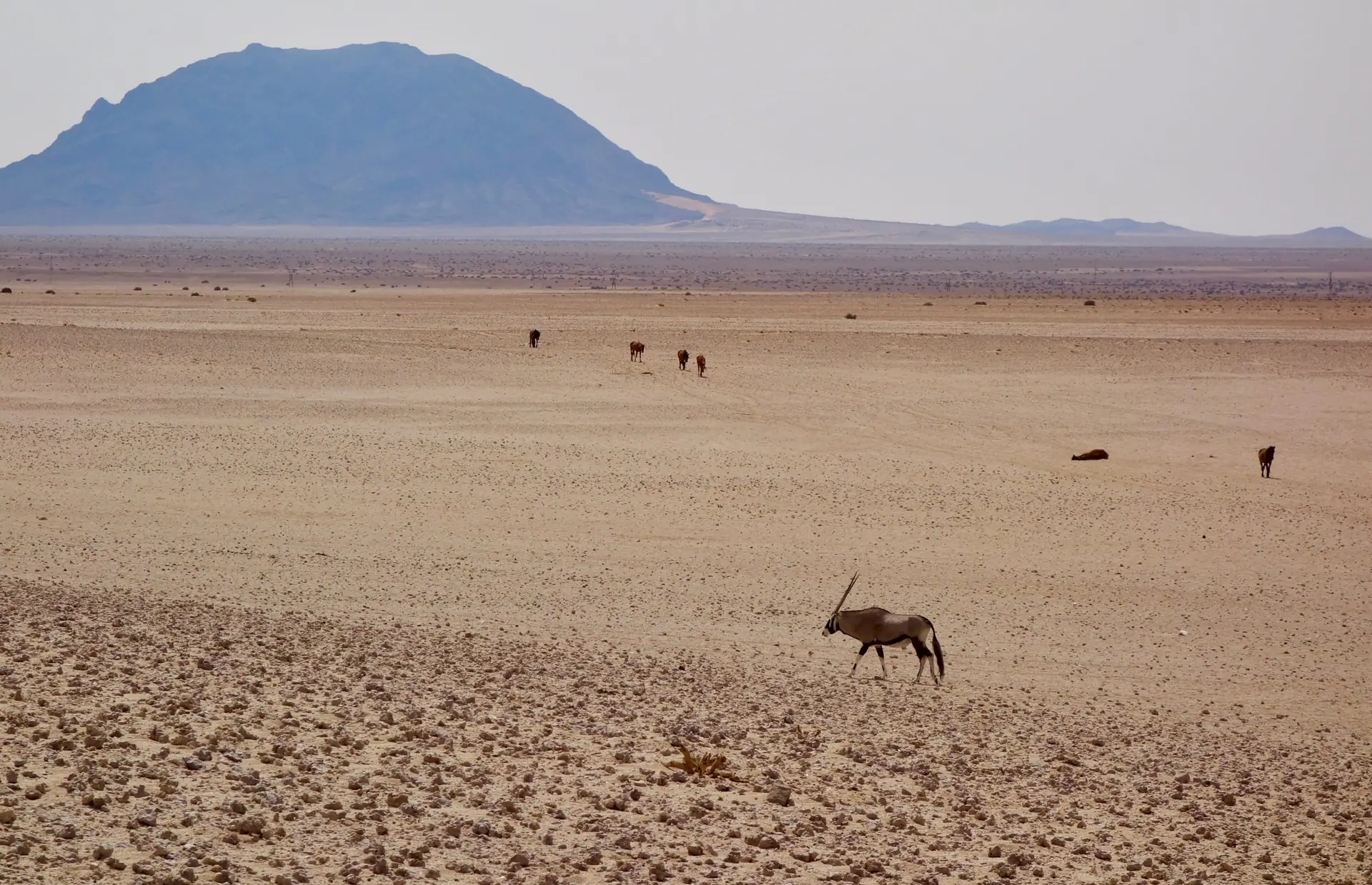
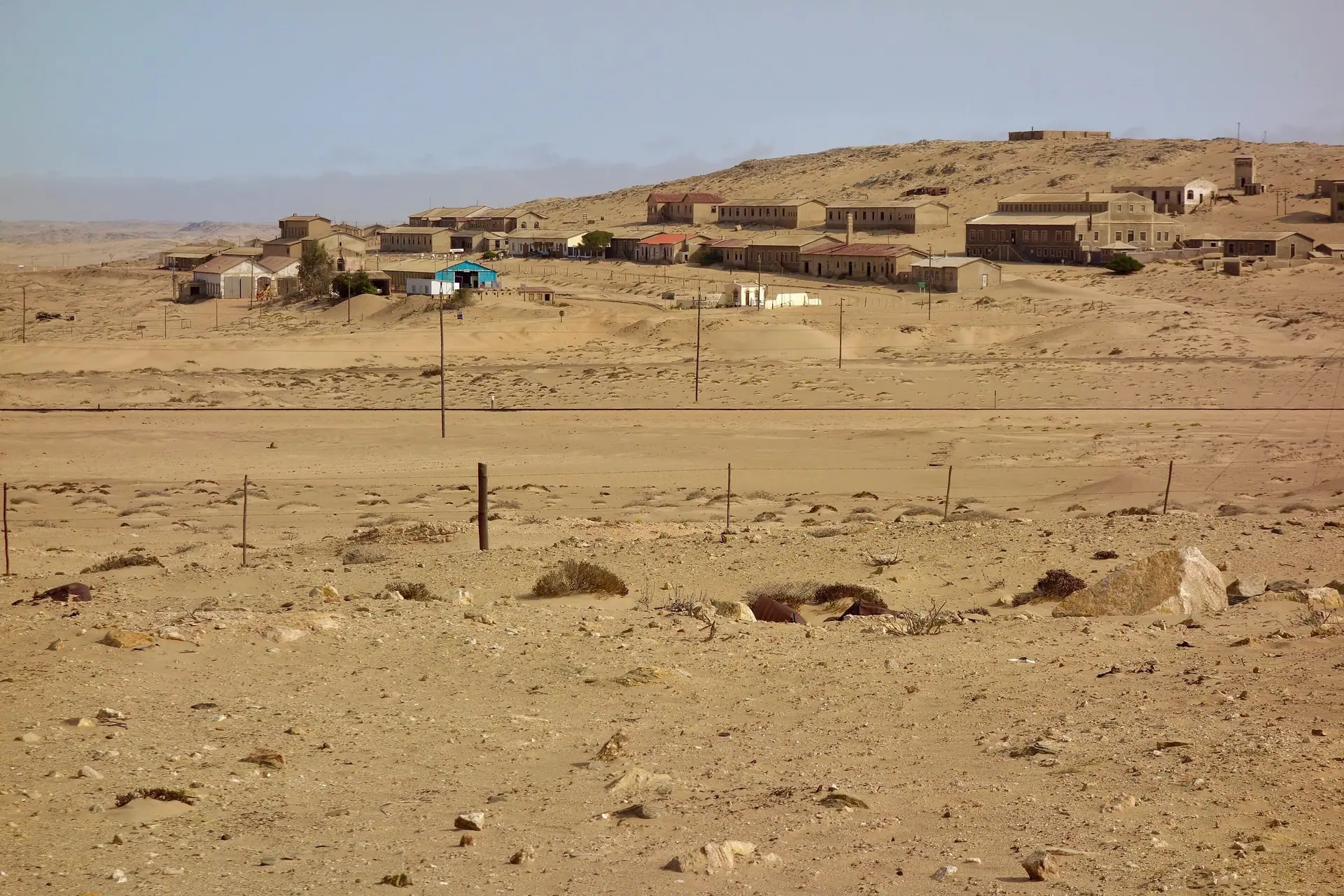
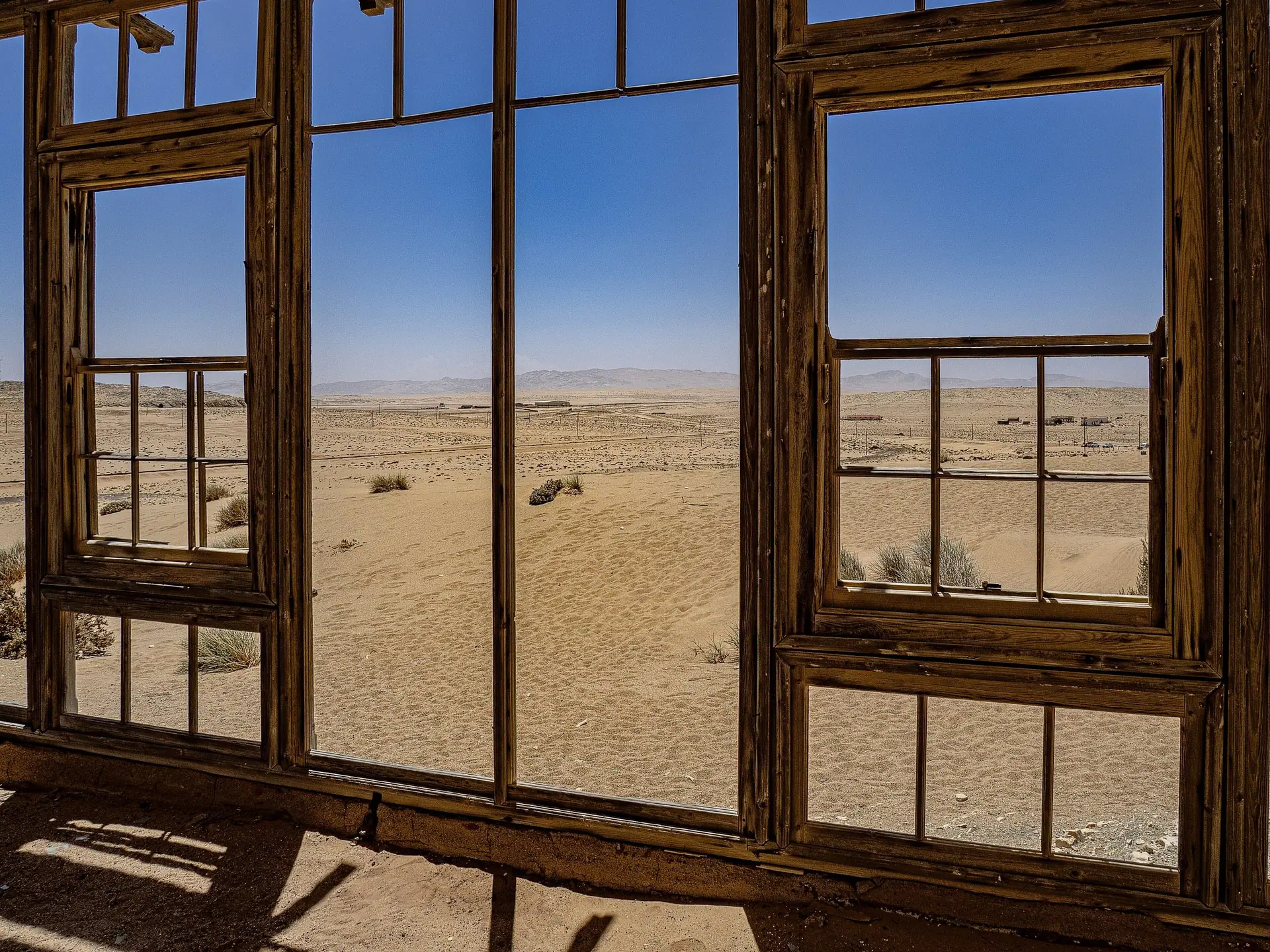
Kolmanskop, 10 km inland, is a ghost town in the desert, abandoned in 1956; its museum is the only part of the Tsau //Khaeb National Park open to the public. Diaz Point is where the Portuguese seafarer Bartolomeu Dias raised a padrão in 1488, and it is a national monument. Near Aus, the wild horses of the Namib, descended from working animals, have lived free for about a century.
Parks and wildlife
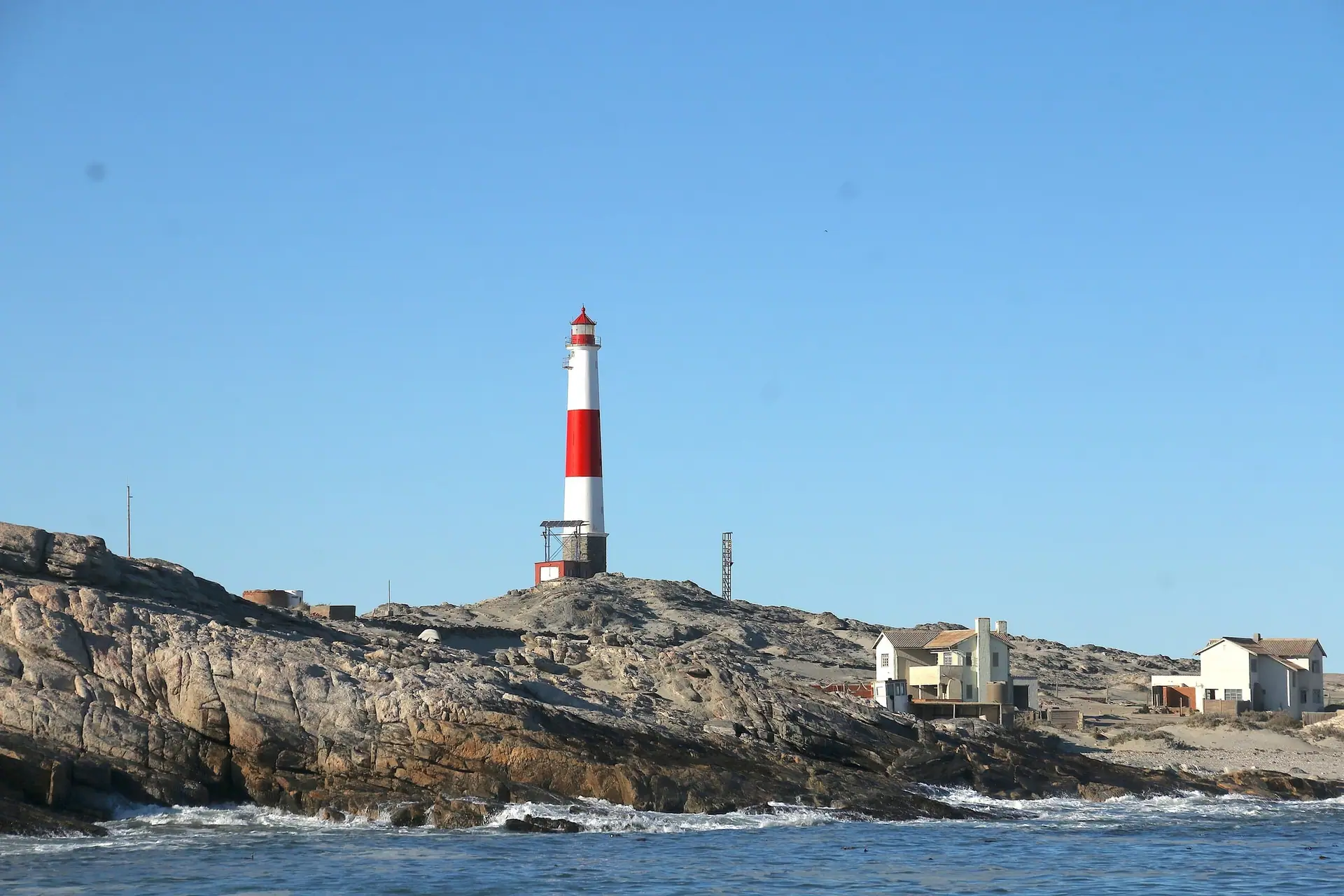
The main upwelling centre of the Benguela current system lies off Lüderitz. Mercury, Ichaboe, Halifax and Possession islands hold 96 per cent of Namibia's African penguins, an endangered species. The town council names rock lobster, oysters and mussels as the seafood of Lüderitz.
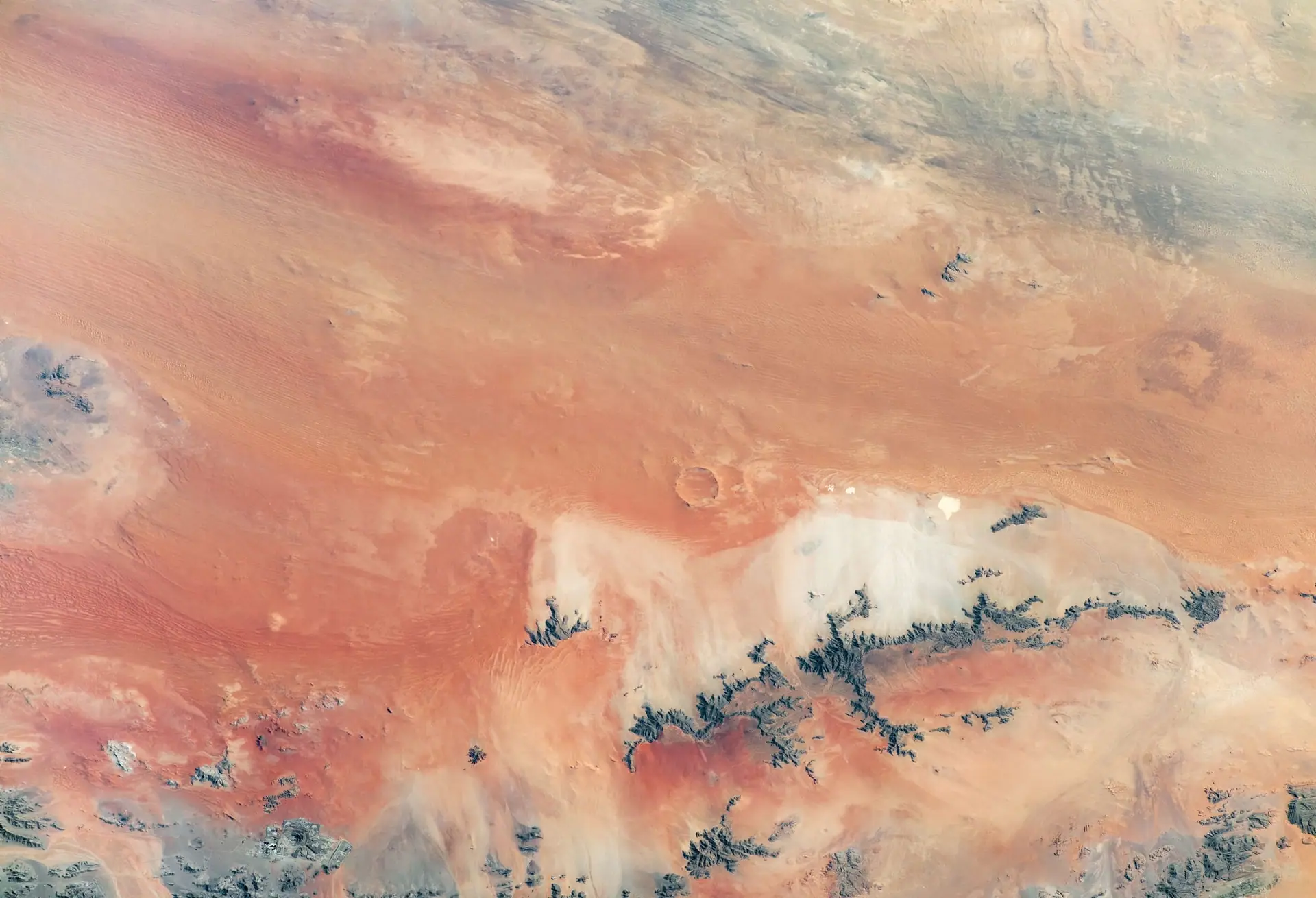
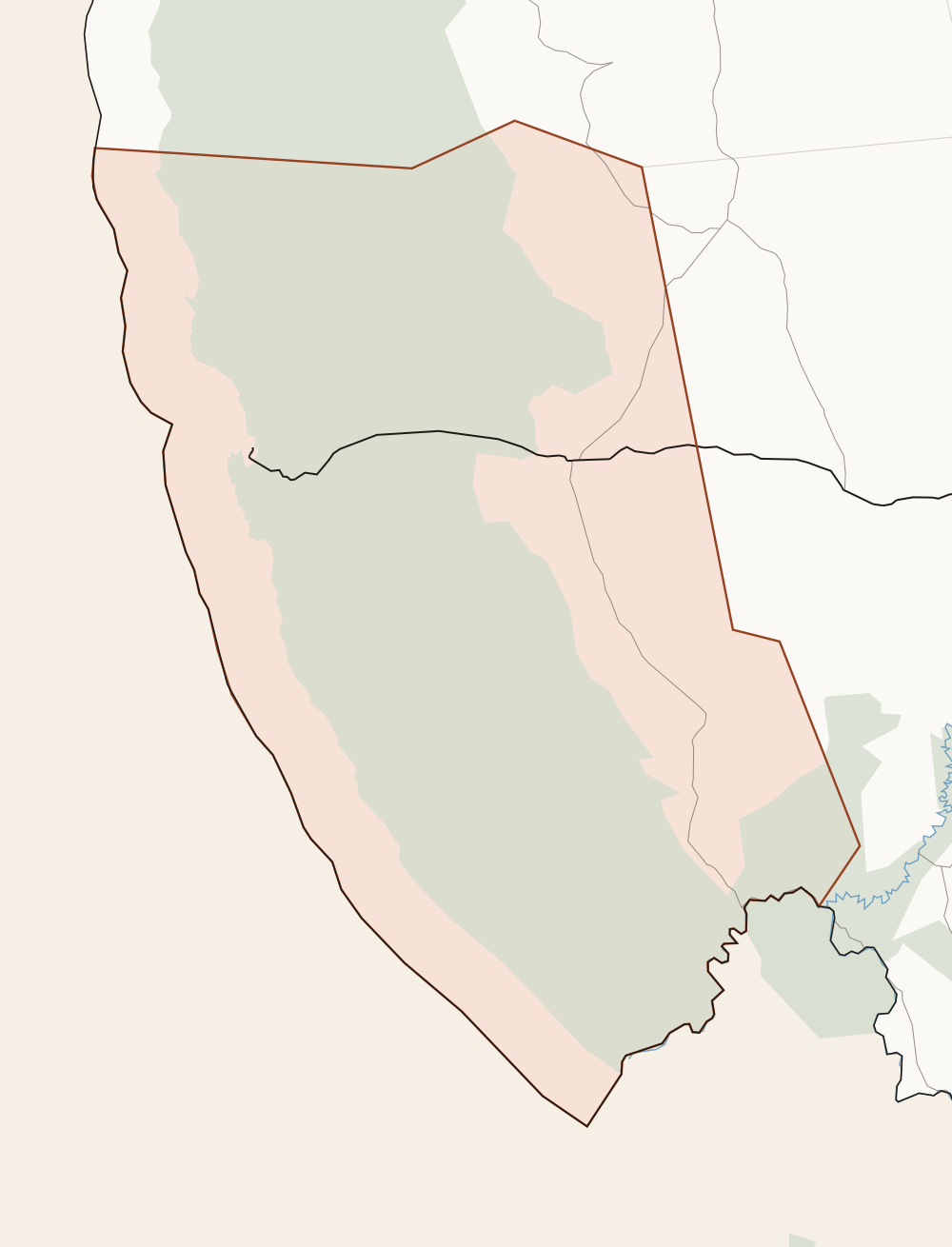
Inland, the Tsau //Khaeb (Sperrgebiet) National Park covers 22,000 km² and was proclaimed in 2008; the name means 'soft sand'. It has some 1,050 plant species of the Succulent Karoo, nearly a quarter of Namibia's flora on less than three per cent of its land. Access is restricted. One concession runs day tours from Lüderitz to the Pomona ghost town and the Bogenfels, a rock arch 55 m high.
History and culture
The Lüderitz Town Council records that the town was founded in 1883, when Heinrich Vogelsang purchased Angra Pequena. During the diamond fever of 1908 to 1910, many of the newly rich built villas; the Magistrate's Residence of 1909 is one of them and a national monument. At the Deutsche Bank, workers from the diamond fields were paid through a sliding window.
Shark Island has been a registered heritage place since 2019. The town council records that German authorities held a concentration camp there from 1905 to 1907, during the genocide of the Ovaherero and Nama. Since 2025, 28 May has been Genocide Remembrance Day, a public holiday in Namibia. At Aus, the site of a prisoner-of-war camp that held 1,552 German prisoners is a national monument, and an old German fort that guarded the road between Keetmanshoop and Lüderitz has been a historical monument since 1967.
Good to know
Kolmanskop lies in the restricted diamond area, so your tour ticket is also your entry permit. The operator runs guided tours Monday to Saturday at 09:30 and 11:00, and on Sundays and public holidays at 10:00. They last 45 to 60 minutes, are given in English and German, and only the operator's guides may lead them. Drones are not allowed.
In town there are guesthouses and hotels; Namibia Wildlife Resorts does not list a camp of its own in Lüderitz at present. The Lüderitzbucht Museum is on the Namibia Tourism Board's list of museums. Lüderitz had 16,125 inhabitants at the 2023 census. The //Kharas region is not on the CDC's list of malaria areas.
Sources: Lüderitz Town Council · Lüderitz Town Council, history · Lüderitz Town Council, places to visit · Namibia Statistics Agency, 2023 Census, //Kharas region · Ministry of Environment, Forestry and Tourism, Tsau //Khaeb (Sperrgebiet) National Park · Wikidata, Kolmanskop (Q819123) · FlyNamibia, schedule 2026 · OpenStreetMap contributors (ODbL), route relation B4 · OpenStreetMap contributors (ODbL), road distances computed with the OSRM router · UNESCO World Heritage Centre, Tentative List: Benguela Current Marine Ecosystem Sites · National Heritage Council of Namibia, Heritage Places · Legal Assistance Centre, NAMLEX index: National Heritage · Government Gazette 6844, Government Notice 23 of 2019 (Shark Island heritage place) · Government Gazette 8373, Proclamation 19 of 2024 (Genocide Remembrance Day) · Kolmanskuppe Ghost Town Tours, tours and prices (operator) · Namibia Airports Company, Lüderitz Airport · Namibia Tourism Board, 4x4 and off-road · Namibia Tourism Board, museums and monuments · Namibia Wildlife Resorts, resorts · CDC, Travelers' Health: Namibia · OpenStreetMap contributors (ODbL), route relation C14 · OpenStreetMap contributors (ODbL), road number C13 read from map data · checked 24 October 2026